 Part Machining / Mould
 Sheet Metal / Hand Plate
Customize&Volume Production
Service:+86-755-23208040
Project:+86-18028781979
Part Machining / Mould 
 2026-01-17
 747
Share:
747
Share:


Turning-Milling Compound Machining: Definition and Core Concepts
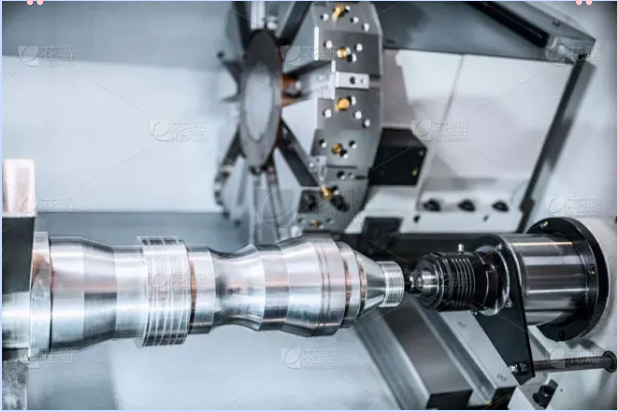
Turning-Milling Compound Machining is an advanced manufacturing method that integrates turning and milling technologies, enabling the completion of multiple composite processes such as turning, milling, drilling, and boring in a single setup through multi-axis linkage (e.g., X/Y/Z/C axes) on a single machine. Its core lies in process integration, which utilizes the combined trajectory of workpiece rotation and tool movement for cutting, significantly enhancing machining flexibility. The technical foundation includes power turret heads, secondary spindle configurations, and CNC system integration, supporting precision machining of complex geometries. For instance, 5-axis turning-milling compound machines achieve spatial surface machining via C-axis linkage, reducing error accumulation from traditional multi-process transitions and laying the groundwork for high-precision part manufacturing.
The prominent advantages of turning-milling compound machining
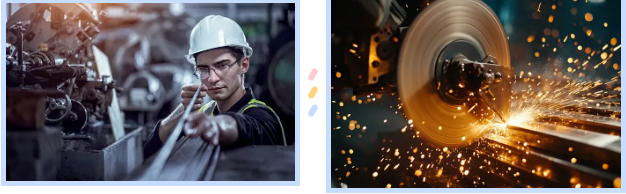
The core advantage of turning milling composite machining lies in the dual improvement of efficiency and accuracy. One Shot Machining with a single clamping process avoids benchmark conversion errors and improves machining consistency. At the same time, the In process Inspection function monitors key data in real-time to ensure controllable quality. In addition, shortening the process chain reduces the number of equipment and lowers production costs (Cost Reduction), while compact design optimizes workshop space utilization. The technological highlights include high rigidity bed design, automatic tool changing system (ATC), and intelligent cooling solution, which together drive a leap in production efficiency and are particularly suitable for mass production scenarios.
Car milling composite technology is widely used in high-precision industries such as aerospace, medical devices, and semiconductor equipment. In the aviation field, it efficiently processes complex components such as turbine blades, reducing material waste; The medical industry relies on its precision in manufacturing implants. In addition, automotive manufacturing and energy sectors such as wind power also benefit from their multitasking capabilities, enabling efficient molding of irregular parts. With technological iteration, turn milling composites are gradually replacing traditional machine tools and becoming a key driving force for intelligent manufacturing, meeting the needs of modern industry for complex and miniaturized parts.
Company:SHENZHEN INDUSTRIALMAN PRODUCT RP&M CO., LTD
TEL Service:+86-755-23208040
Mobile:+86-18028781979(Manager Ruan)
Email:sales@gyrmodel.com QQ:312520366
Address:DEFG, 19/F, Ruijun Bldg, Zhongxin Road #108,Xinqiao Baoan Area,Shenzhen City,China
Factory address of Humen:Building 6, No. 9 Pujiang Road, Daning Community, Humen Town, Dongguan City
Factory address of Hubei:No.2 Guanggu Avenue, Tieshan District, Huangshi City, Hubei Province


Tiktok



 English



 Consult now


