 Part Machining / Mould
 Sheet Metal / Hand Plate
Customize&Volume Production
Service:+86-755-23208040
Project:+86-18028781979
Part Machining / Mould 
 2026-04-10
 663
Share:
663
Share:


Core Technology: Dominated by Powder Bed Fusion, Simultaneous Improvement of Precision and Efficiency
As a core branch of metal additive manufacturing, stainless steel 3D printing is currently dominated by powder bed fusion technology. Among them, Selective Laser Melting (SLM) and Direct Metal Laser Sintering (DMLS) account for 68% of the market share, achieving an ultra-high dimensional precision of ±0.05mm. Its core principle is to spread spherical stainless steel powder of 10-60 microns layer by layer, and selectively scan with a high-power laser to melt and solidify the powder for layer-by-layer superposition molding, enabling the manufacturing of complex structures without traditional molds. Among mainstream printing materials, 316L stainless steel accounts for 52% and 17-4PH accounts for 28%. With excellent fluidity and molding performance, they are widely adapted to the needs of various industries. Meanwhile, the application of multi-laser systems has increased printing speed by 40% compared with five years ago, and powder reuse efficiency reaches 90%-96%, greatly reducing material waste and promoting the technological upgrade towards high efficiency and low carbon.
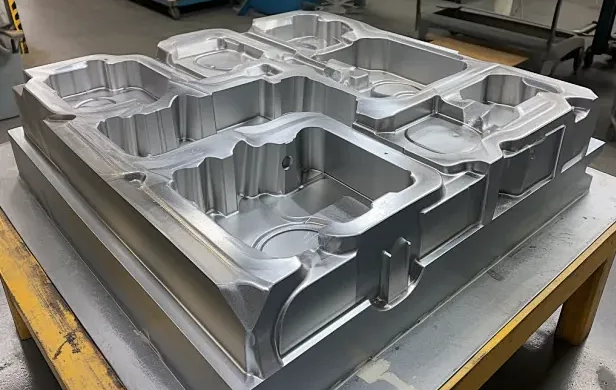
With the advantages of high strength, corrosion resistance and customizability, stainless steel 3D printing has deeply penetrated aerospace, medical, automotive and other key fields, becoming an important support for the upgrading of high-end manufacturing. In the aerospace field, 72% of American aerospace manufacturers have integrated it into production for manufacturing aircraft structural parts and engine components, greatly reducing equipment weight and improving reliability. In the medical field, its good biocompatibility makes it an ideal manufacturing method for artificial joints and dental implants, enabling personalized customization according to patients' physical signs. The automotive industry uses it to realize small-batch customized parts and rapid mold development, shortening the traditional mold manufacturing cycle from several months to 1-2 weeks, and reducing the manufacturing cost of small-batch parts by 40%-60% compared with traditional processes. In addition, it also shows irreplaceable application value in energy, mold manufacturing and other fields.
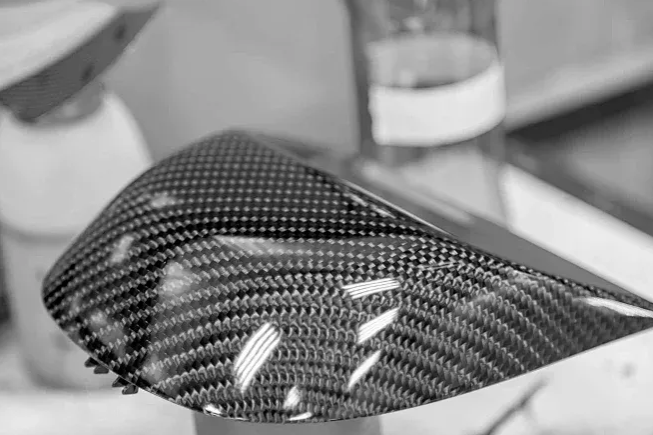
The current stainless steel 3D printing industry is experiencing rapid growth. The global market size will reach 697.54 million US dollars in 2026 and is expected to increase to 1.14893 billion US dollars by 2035, with a compound annual growth rate of 6.1%. The domestic market is also strong, with China's market size reaching 8.67 billion yuan in 2024, a year-on-year increase of 19.3%, and is expected to rise to 10.32 billion yuan in 2025. At the industrial chain level, upstream stainless steel powder has gradually achieved domestic substitution, with sphericity and purity close to international advanced levels; midstream equipment manufacturers continue to launch large-size, multi-laser equipment, breaking the import monopoly. In the future, the industry will develop towards high precision, intelligence and diversification. The research and development of new high-temperature and corrosion-resistant stainless steel alloys will be accelerated. The integration of industrial Internet and 3D printing will realize the intelligentization of the whole production process. Meanwhile, policy support and industrial collaboration will promote its leap from batch customization to large-scale production, unlocking more industrial application scenarios.
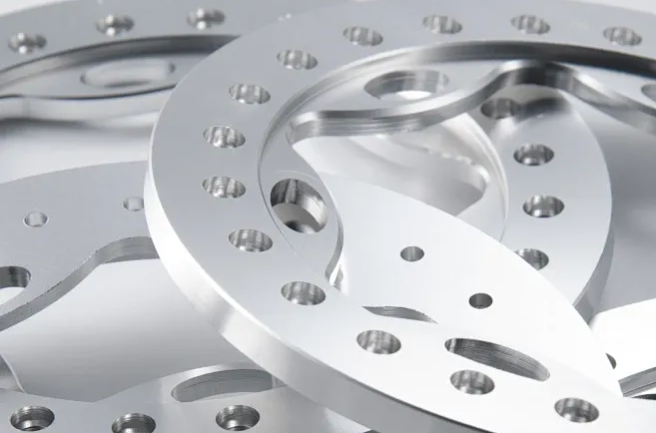
SHENZHEN INDUSTRIAL MAN RP& M CO.,LTD is at your service 24/7! Enquiries are warmly welcomed!

Company:SHENZHEN INDUSTRIALMAN PRODUCT RP&M CO., LTD
TEL Service:+86-755-23208040
Mobile:+86-18028781979(Manager Ruan)
Email:sales@gyrmodel.com QQ:312520366
Address:DEFG, 19/F, Ruijun Bldg, Zhongxin Road #108,Xinqiao Baoan Area,Shenzhen City,China
Factory address of Humen:Building 6, No. 9 Pujiang Road, Daning Community, Humen Town, Dongguan City
Factory address of Hubei:No.2 Guanggu Avenue, Tieshan District, Huangshi City, Hubei Province


Tiktok



 English



 Consult now


