 Part Machining / Mould
 Sheet Metal / Hand Plate
Customize&Volume Production
Service:+86-755-23208040
Project:+86-18028781979
Part Machining / Mould 
 2026-04-25
 815
Share:
815
Share:


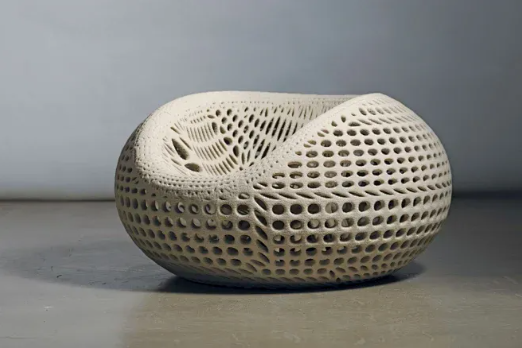
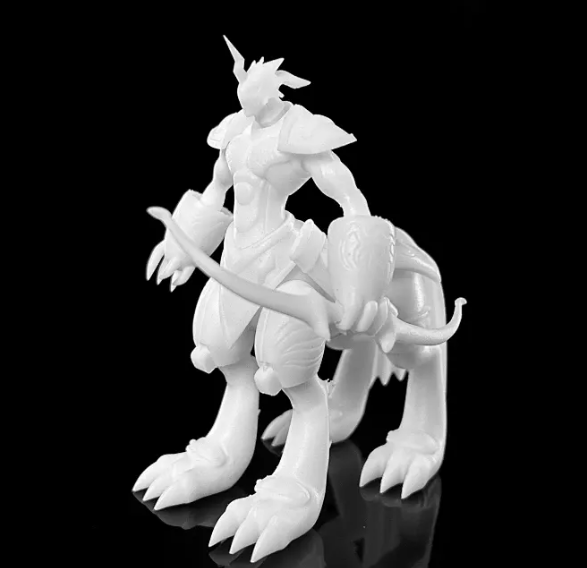
The primary prerequisite for choosing 3D printing materials is to clarify the type of printer you use. Different printers operate on fundamentally different principles, leading to significant differences in compatible materials. This is the foundation to avoid material waste and ensure successful printing.
Currently, mainstream 3D printers fall into two main categories:
· Fused Deposition Modeling (FDM) Printers: The most common type for home and entry-level use, compatible with filaments such as PLA, PETG, ABS, and ASA. These materials are relatively low-cost and easy to operate.
· Stereolithography (SLA)/Digital Light Processing (DLP) Printers: Focused on high precision and fine detail, only compatible with various photosensitive resins (including standard resins, rigid resins, flexible resins, etc.), ideal for scenarios requiring precision.
Ignoring the printer type and choosing materials blindly will result in failed prints, even if the material itself has excellent properties. Thus, locking in the material range compatible with your printer is the first step in selection.
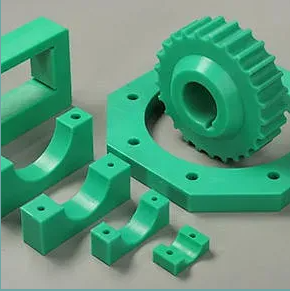
Once the material range is determined, the key is to match the material's critical performance based on the intended use, which directly determines the usability and lifespan of the printed parts:
· For beginners or non-functional items (figurines, teaching models): Prioritize PLA. It is easy to print, has a high success rate, is odorless, eco-friendly, and low-cost, allowing quick learning.
· For daily functional items (storage boxes, brackets, lampshades): PETG is the optimal choice. It balances strength and printability, is water/chemical-resistant, moderately heat-resistant, and suitable for most household applications.
· For industrial parts and load-bearing structures (assembly fixtures, gears): Choose ABS or Nylon. ABS offers high strength and is paintable; Nylon provides wear resistance and fatigue resistance.
· For high-precision fine details (jewelry, precision prototypes): Prefer photosensitive resins.
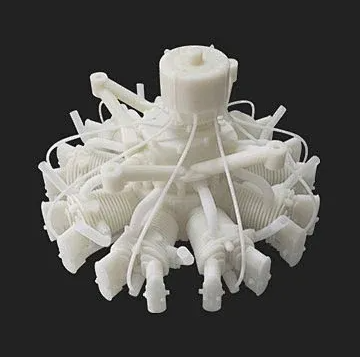
Beyond the printer type and application, the usage environment and your own skill level must also be considered to avoid issues like "compatible but unmanageable materials" or "successful prints that are not durable."
· Indoor use: PLA, PETG, and other common materials work well.
· Long-term outdoor use: Select ASA for its UV resistance and anti-aging properties, preventing deformation and brittleness from prolonged exposure to wind and sun.
· Exposure to high temperatures, water, or oil: Avoid PLA; prioritize PETG or ABS.
From a printing difficulty perspective:
· Absolute beginners are recommended to start with PLA, which requires no complex calibration.
· Users with basic skills and enclosed printers can try ABS or ASA.
· Those pursuing fine details and willing to accept post-processing for resin prints can choose light-curing resins.
Only by comprehensively balancing environmental requirements and operational capabilities can you select the most suitable material.
Company:SHENZHEN INDUSTRIALMAN PRODUCT RP&M CO., LTD
TEL Service:+86-755-23208040
Mobile:+86-18028781979(Manager Ruan)
Email:sales@gyrmodel.com QQ:312520366
Address:DEFG, 19/F, Ruijun Bldg, Zhongxin Road #108,Xinqiao Baoan Area,Shenzhen City,China
Factory address of Humen:Building 6, No. 9 Pujiang Road, Daning Community, Humen Town, Dongguan City
Factory address of Hubei:No.2 Guanggu Avenue, Tieshan District, Huangshi City, Hubei Province


Tiktok



 English



 Consult now


