 Part Machining / Mould
 Sheet Metal / Hand Plate
Customize&Volume Production
Service:+86-755-23208040
Project:+86-18028781979
Part Machining / Mould 
 2026-07-05
 667
Share:
667
Share:


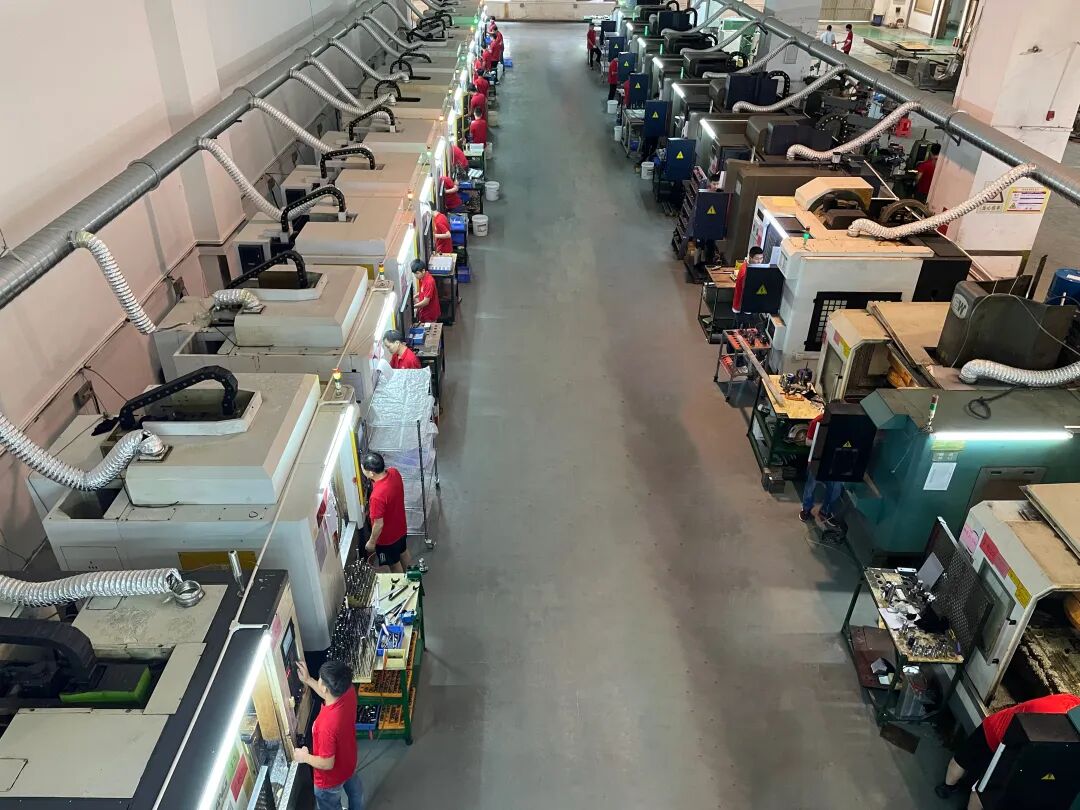
The stable operation of industrial robots and humanoid robots relies primarily on high-precision metal structural supports, and CNC precision machining is the key process for manufacturing these core components. Robots are not monolithic devices; their core metal components—such as arm linkages, joint housings, connecting flanges, gearhead mounts, and chassis bases—all require precision machining using CNC lathes and machining centers. These parts demand extremely high standards for dimensional tolerances, flatness, and perpendicularity, often requiring micrometer-level precision, which conventional stamping or casting processes cannot meet. Only through the precise programming and automated cutting of CNC equipment can excess material be removed from the blank, allowing for the accurate machining of various irregular structures, mounting holes, and mating surfaces. This lays a solid foundation for the robot’s subsequent assembly and flexible operation, making it an indispensable preliminary process in robot manufacturing.

During operation, robots frequently rotate, extend, and retract while carrying loads. The fitting precision and structural strength of their components directly determine the equipment’s stability and service life—this is the core value of CNC machining. Parts machined by hand or using simple, conventional equipment are highly prone to dimensional deviations and poor interface fit, which can cause robot operation to stutter, joints to loosen, and positioning to drift, significantly reducing operational accuracy. In contrast, precision CNC machining offers the advantages of automation, standardization, and high precision, enabling the error-free replication of parts in batches and ensuring that every structural component fully meets standards for fit and flatness. Precise part fit effectively reduces wear during robot operation and lowers the probability of equipment failure. Whether it is a high-speed industrial robotic arm or a flexible humanoid robot, both rely on the quality of CNC machining to achieve long-term, stable operation.
With the rapid development of smart manufacturing, robots are evolving toward lighter weight, higher precision, and greater flexibility. This places higher demands on machining processes and further highlights the central role of CNC technology. Today, high-end robots predominantly use lightweight materials such as aluminum alloys and high-strength steel. Their complex curved surfaces, thin-walled structures, and precision assembly interfaces can only be finely machined using five-axis CNC machining centers. From the heavy structural components of traditional industrial robots to the slender skeletons and precision joint parts of new humanoid robots, the continuous advancement of CNC machining processes is driving ongoing performance optimization in robotic equipment. It can be said that without mature CNC precision machining technology, high-precision assembly and large-scale production of robots would be impossible; CNC processes have become the core pillar supporting innovation and development in the robotics industry
Industrial Robot Rapid Prototyping Technology Co., Ltd. is available 24 hours a day! Feel free to contact us!
Company:SHENZHEN INDUSTRIALMAN PRODUCT RP&M CO., LTD
TEL Service:+86-755-23208040
Mobile:+86-18028781979(Manager Ruan)
Email:sales@gyrmodel.com QQ:312520366
Address:DEFG, 19/F, Ruijun Bldg, Zhongxin Road #108,Xinqiao Baoan Area,Shenzhen City,China
Factory address of Humen:Building 6, No. 9 Pujiang Road, Daning Community, Humen Town, Dongguan City
Factory address of Hubei:No.2 Guanggu Avenue, Tieshan District, Huangshi City, Hubei Province


Tiktok



 English



 Consult now


